Over the last few months, there has been much confusion regarding not only LEED in general, but the transition from LEED v2.2 to LEED 3.0. Here is a quick summation, or clarification, of some of these commonly mistaken LEED terms:
1.LEED vs. LEEDs: Leeds is a city in England, while LEED is a rating system used to distinguish high-performing, sustainable buildings.
2. Certification vs. Accreditation: Buildings and projects earn LEED certification, while people become LEED Accredited Professionals (AP).
3. LEED Certified vs. Silver vs. Gold vs. Platinum: There are four levels for achieving LEED certification. LEED Accredited Professionals must set a goal for a specific LEED certification level and must abide by the appropriate guidelines to achieve points. The point ranges for each level are as follows: LEED Certified 40-49, LEED Silver 50-59, LEED Gold 60-79, and LEED Platinum 80-100. This is before achieving the Innovation in Design credits and the ten points they can earn you:
IDc 1.1 – 1.5: 5 points
IDc2 LEED AP: 1 point
Regional Priority Credits: 4 points max
4.USGBC vs. GBCI: In the beginning, there was only the USGBC. Now, the USGBC has split and become two separate organizations: the USGBC and the GBCI. The USGBC developed the LEED Rating System and now hosts an online membership directory of all LEED APs. The GBCIprovides third-party project certification and professional credentials, recognizing excellence in green building performance and practice.
5.Legacy LEED AP vs. LEED AP Specialty: A Legacy LEED AP is someone who passed any version of the LEED AP exam prior to June 30, 2009. One who has earned the designation of LEED AP Specialty has taken and passed the LEED v3 exam. This person has an enhanced specialty in one of five areas.
6.LEED Green Associate vs. LEED AP Specialty: The LEED Green Associate is the newest LEED credential and the required first step before taking the LEED AP Specialty exam. The GBCI has created the LEED Green credential to denote basic knowledge of green design, construction, and operations. The second course and exam is the LEED AP, offered in five different specialties that denote prolific knowledge of green building.
Learn more about these LEED terms and concepts during one of our LEED Exam Prep courses!
We’re going to cover the costs of LEED certification and LEED accreditation here.
LEED Certification is a term that’s often confused for LEED Accreditation. LEED Certification refers to high-performance green buildings, whereas LEED Accreditation refers to the people who have shown proficiency on the LEED standards.
Cost of LEED Certification – Buildings
The costs of LEED certification depend on a project’s rating system and size.
For the purpose of this article, we’re going to list the most common price ranges so you can get a general idea of what to expect.
According to the USGBC, the costs of LEED certification break down as follows:
Project registration: $1,500
Precertification: $5,000
Certification review: Ranges from $3,400 to $33,000 depending on project gross floor area
There may be extra costs, specific to expedited reviews, credit appeals, formal inquiries, and/or hiring a sustainability consultant.
Also, a LEED project owner or administrator can receive a discount for being a USGBC member.
If you’re new to sustainability, it’s highly recommended to work alongside a LEED consultant. They have a passion and technical understanding of the LEED certification requirements that will ensure that you meet your goals on time and within budget.
Cost of LEED Accreditation – People
The total cost of earning a LEED accreditation can vary because prices of study materials vary by provider, and the U.S. Green Building Council (who manages LEED) offers discounts for eligible groups of people on the LEED credentialing exam.
Most people will end up spending between $650-$1000 after paying for training, study aids, and the exam itself.
And that’s just for the LEED Green Associate level. That does not take into account extra efforts to earn a more advanced LEED credential, which would ultimately require more training and another exam fee.
If you’re looking for more information on total costs to earn a LEED professional credential, see our post on LEED GA Exam Pricing to see if you’re eligible for discounts.
Why LEED is Worth It
Although there are upfront costs of LEED Certification, you’ll find that the monetary and health benefits make up for it.
Owners of commercial buildings may be able to charge higher rents based on their building’s status. The Royal Institution of Chartered Surveyors (RICS) studied the financial performance of “green” office buildings in the United States, finding that a commercial building with an environmental certification will rent for about three percent more per square foot with the difference in effective rent estimated at about six percent per square foot. The increment to the selling price may be as much as 16 percent, according to the study.
Other studies have also shown benefits of LEED certification to include greater productivity among employees, more loyalty to a company that implements certification, and greater satisfaction with their job.
If you’re interested in learning more about what’s involved with getting a building certified, you should consider enrolling in a LEED training class. Regardless of whether you go on to take the LEED exam and earn a credential, it would certainly be advantageous to learn about LEED requirements if you plan on pursuing certification for a building project.
I recently came across an interesting article about tracking LEED project credits with computer software. As many LEED APs probably know, tracking LEED credits is a document-intensive process. Submittal documentation includes drawings, receipts, product spec sheets, photos, commission plans and more. Adding to the clutter, numerous project members access and edit these documents.
Project management software, especially web-based systems, act as a repository for the storage and retrieval of critical project documents. Simply upload a document into the system, then attach it to the appropriate LEED-credit log. From there, you can track the history of a document, see every change that has been made, and who made it.
This article showcases two software programs for tracking LEED credits: one called EADOC and one from the company Procore. These programs include information on what materials were used, the project location, and status of approval. They also provide a paper trail for proof of compliance.
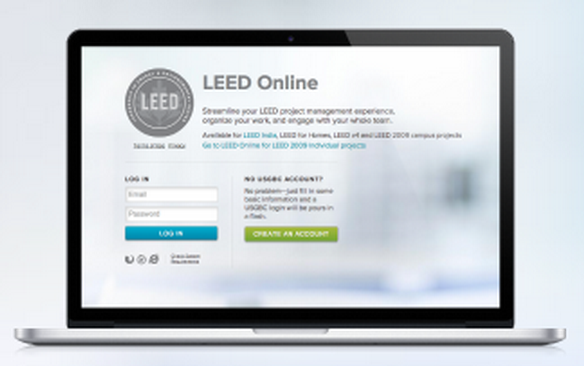
Construction professionals also use LEED Online and Arc to keep the details of their building projects organized. In fact, Arc is a newer online database that can be applied to all building project types, not just LEED projects. There’s great value to using online project management software, whether your project is “green” or not.
Still, using software programs to track LEED credits certainly eases the certification process. It is a great way to manage achieved credits, as well as other submitted documentation.
Managing a LEED project, in general, requires a lot of attention to detail. In an effort to gain as many LEED points as possible, LEED AP professionals have to remain organized to effectively track LEED credits pursued and earned. Computer software is the best way to accomplish this task.
And yet, before you plunge into managing a LEED project, perhaps it’s best to get a basic understanding of the LEED credit requirements. You can do this after attending a LEED training course, such as LEED Green Associate. Start today!
It’s crazy to think about New York’s environmental history: Did you know that the city of Hoboken was originally an island separated from the NJ mainland? Did you know that the first European settlers in the NY area had trouble landing their ships in Manhattan because there were too many whales in the Hudson River?
That’s not really mentioned in this article, but it’s cool to think of what a city like New York might have looked like 400 years ago. To give a quick background, Henry Hudson (the inventor of the steamboat) first sailed up the Hudson River in 1609. A couple of decades later, Dutch settlers began colonizing the areas that are now Jersey City and Manhattan.
Nowadays, the entire New York metro area is one big block of concrete (which happens to be why Stormwater Control is one of LEED’s Regional Priority credits for the area), but once upon a time, it was a lush paradise with hills, streams, and wildlife (lots of it). From one day to the next, it’s very easy to forget the impact that mankind has on nature, but after taking the long view of a few centuries, it’s equally impossible for it to go unnoticed. All you have to do is take a few moments to think about and research it.
Even though the Earth has been around for a few billion years, it’s been about 100 years since any species (i.e. man) halfheartedly began considering its impact on others… if for no other reason than for our own preservation. It’s important that we reflect on the environmental history of New York, and all cities, to find ways that we can be better. Here’s to hoping 400 years from now people don’t look back and think that we royally screwed something up.
*Composite and simulation by Markely Boyer; photograph by Arthus-Bertrand/Corbis
This LEED AP Exam joke is the kind that starts with relatable phrase and ends with a fill-in-the-blank.Check out what these posters on the ARE Forum are saying!
According to the Green Business Certification Institute, the LEED AP program has always been grounded in the pursuit of excellence and continuous improvement. To continue to meet these goals, GBCI developed a new, multi-faceted credentialing system that ensures that LEED professionals have the latest knowledge and understanding of green building practices and that they are recognized for distinction.
Changes are significant, such as incorporating new ASHRAE standards, regional credits, and better LEED Online software platform.
Who Should Become a LEED AP Specialty?
The LEED AP+ credential is meant for professionals currently implementing LEED or who may in the future, and who therefore require an in-depth knowledge of the core concepts, strategies and implementation process of the LEED rating system.
Architects, design professionals, green home builders, and legacy LEED APs are some examples of the types of people who may be interested in becoming a LEED AP+.
What’s New with LEED AP Specialty?
A difference between the current LEED APs and the new LEED AP+ is that you must indicate in which area of specialty the accreditation was earned. Currently, the areas of specialty are the following:
Commercial building design and construction (BD+C)
Commercial operations and maintenance (O+M)
Commercial interiors (ID+C)
Residential design and construction (Homes)
Neighborhood development (ND)
The changes to the exam system are reflective of the rapid advances in green building technology and practice in the marketplace.
Currently, you are a LEED AP. Under the new system, you will be known as a “Legacy” LEED AP. This distinction can never be taken away from you. You may still use the LEED AP title, but you will no longer appear in the active LEED Professional Directory as of June 2011, unless you gain active status.
As of now, you have two years to opt into the new system. Although retaking the exam is not required, you will need to sign the USGBC disciplinary policy and agree to credential maintenance. Credential maintenance includes participating in 30 hours of continuing education required every two years, with six hours specific to the LEED Rating System, credit categories, and/or LEED updates.
After completing these steps, you will get to use the new LEED AP+ designation and be listed in the active registry. You will not be listed in the active directory with a specialty designation like LEED AP BD+C. Retesting is only necessary to advance to a LEED AP+ specialty designation. The LEED AP+ exam will have two portions; in order to obtain the specialty designation, you will only have to take the specialty portion of the exam.
For the first two years, the credentialing maintenance fee is waived. After June 2011, the credential maintenance fee will be $50 every two years for continuing education.
So Why Opt into LEED v3?
Well, you do want to be revered as one of the best and most knowledgeable people in your industry, right?
The general public has finally caught on to the green building trend. They’re going to progressively need your expertise to help them accomplish new sustainable living goals. Not only will it look distinguished on your part for having gone the extra mile, but you will actually be able to provide more current information that will be relevant to your client’s needs.
The last LEED v2.2 exam will take place on June 30, 2009. If you did not make an appointment by March 31, 2009, you cannot take the LEED v2.2 exam now. The Green Associate courses are already being offered, so if you make an appointment now, you would be making an appointment to take the new exam.
Because it’s new, you may not know what to study for the specialty portion of the LEED AP+ exam. Everblue Training Institute will be providing LEED exam prep courses to help you out.
Dear Chris, I’m feeling very satisfied as I provide this Everblue LEED training review. I am writing to inform you that I passed my LEED AP examination with a score of 194! About two-thirds of the way through the examination, I was aware I was going to pass; however, I was shocked at how high my score was.
I attribute my success to the Everblue course and instruction. I had previously taken a course from another education provider, however, that experience left me still lacking critical LEED knowledge and understanding. Secondly, I took an online course, which ended up being a very dry “reading” of the LEED credits. So after two courses, I was simply without a basic knowledge of the LEED credits and the strategies behind those credits.
I signed up for a two-day Everblue course in April 2009. I found the accommodations and course outline to be extremely powerful and professional. More importantly, I found the TEACHING to be profound, taking me beyond the course intent and into the mind of USGBC.
After the course, I made detailed notes and other visuals to help me understand further the credit and strategies of LEED. I took advantage of the Everblue practice questions, studying each one to understand the knowledge required to understand the particular credit. I also used the practice exam in the week prior to my examination to determine my readiness for the exam. And lastly, YOUR support to me via email was extremely valuable in areas where I was over-thinking the LEED process.
I went into the examination center fully prepared for the challenge ahead. I remained as calm as my mind would allow and proceeded with the exam. I used the entire 2 hour time allotment to answer, make and review my answers. When I finally pressed the SUBMIT button I was prepared for a passing mark, however, my score was beyond what I could have possibly imagined.
I accredit my high score and understanding to the Everblue LEED course, and I recommend Everblue to my friends and colleagues, almost daily. I cannot begin to thank you enough for your support and assistance to me during my preparation. I hope this Everblue LEED training review helps others find the motivation and confidence to pursue this goal.
As you stated at the beginning of the course “If the student will do his/her part in studying, this Everblue course will do its part to help you pass the LEED AP exam.” Truer words have never been spoken.
Here’s looking forward to future training with Everblue.
One of our LEED NC 2.2 students was selected to take the LEED AP BD+C beta exam. I also took the LEED v3 beta test. Between the two of us, I think we have some good takeaways and ideas based on our LEED AP exam feedback.
He took the beta exams for LEED Green Associate and LEED Building, Design, and Construction. Next week, he takes the LEED NC 2.2 exam, just to be sure he earns the credential, since he will not get his beta exam score for a few weeks. There are many calculations, and the exam really tests a candidate’s knowledge of the rating system.
We believe that these new LEED exams are less tricky than the old LEED exams but more difficult because they test much more specific content and calculations from the LEED rating systems.
Taking the Full LEED v3 Exam
I took the LEED v3 beta test today. It was 4 hours long and divided in two parts. The first part was aligned with the LEED Green Associate program, and the second part was aligned with the specifics of the LEED New Building components. I believe I did ok on the first part, and I’m sure I did not do well on the second part. The test had some pretty complex calculations and the need to remember specific formulas to do the calculation. It asked the evapotranspiration rate for a given set of variables, some of which did not apply to the equation. I hadn’t memorized the equation…I only thought I would have to recognize it. The new test format has a built-in calculator function to assist with the calculations…you can click a calculator icon, and the calculator appears to do the math. There were half a dozen questions or so having to do with Integrated Project Delivery as well as Life Cycle Cost analysis. Clearly USGBC intends that the test applicant refer to a much broader base of resource materials than what is necessary for v2.2. As I said, I am certain I did not do well…I will receive results in about 6 weeks. My only hope is that the other beta testers did equally poorly or worse!
Using the LEED Reference Guides
Here are some observations I had as I went along, and I’m sure you are already aware of this stuff. The new LEED Reference Guide for Green Building and Construction, 2009 edition, is very cumbersome and not user friendly. The material is not as neatly organized and presented as is done in the LEED New Construction & Major Renovation v2.2 Reference Guide, 3rd edition. I have had a devil of a time trying to make heads or tails of the material in the new guide after becoming familiar with the v2.2 Reference Guide. The new guide is graphically superior in regard to illustrations and examples. However, the organization of the credit subheadings is awkward at best. There is much more material in the new Reference Guide.
I’ll be taking the v2.2 test a week from today and might as well provide the LEED AP exam feedback for that test as well.
The LEED Green Associate exam is a professional credentialing exam administered by Prometric.
About the Prometric Testing Center
The morning I went to take my exam, Prometric had server issues and had to dismiss half of the candidates at the center because their computers would not load the exam (ouch, that’s painful). Luckily, my computer was not one of them. Overall, the testing center was a bit chaotic when I arrived. Aside from the obviously upset group of people above, there was a gentleman in front of me from South America who had four names listed in his passport but only two names listed in the Prometric system. They were not going to let him test, and he was very upset. Once they moved him off the front desk, I sailed right in. The Prometric communications had recommended that I arrive 30 minutes early, and I see why. I got there at 8 a.m. and wound up waiting in line and signing in at 8:22 after all of the drama. Interestingly, the Prometric proctor told me that she recommended that I utilize my scrap paper to do a brain dump during the ten-minute tutorial. I have heard experiences before where people were told that they were not allowed to do a brain dump.
About the LEED Green Associate Exam Structure
The exam was 100 questions in 2 hours. There is a calculator on the exam now, but I did not have to use it at all. There was the tutorial 10 minutes prior to the exam, and I actually took the post-exam survey, which was about the Prometric testing center experience. Overall, the structure was exactly what the candidate handbook said it would be.
About the LEED Green Associate Exam Questions
80% of this LEED exam was single-answer multiple choice with exactly four choices. The remaining 20% was multiple-answer, multiple choice with choose 2 or 3 out of 4 or 5 answers. Many of the questions were very straightforward, and I finished my first pass at all of the answers in 58 minutes before returning to review the questions. The LEED Green Associate exam tested all of the LEED concepts at a very broad level. In some ways, the LEED Green Associate might actually be harder to study for since there is no credit framework within which to memorize or structure the information. 90% of the questions were very straightforward but also very in-depth. There were lots of refrigerant questions and down to the name and number of the refrigerants to use (wow, who has that memorized). The remaining 10% were tricky because of things like a double negative or because the wording was vague, and I had to read the question multiple times to even figure out what the exam was asking for (maybe it was a poorly worded question). I was actually amazed at the level of background knowledge required for this exam. There is no magic formula or LEED percentages to memorize but rather you’ll have to become well versed in all of the LEED green building topics in order to answer the questions on this exam.
Interestingly enough, the exam referred quite a bit to credit categories (Sustainable Sites, Water Efficiency, etc) and to credits themselves (Daylight, Fundamental Refrigerant Management, etc). I had not expected this on the exam since I assumed the LEED Green Associate was testing general knowledge and not any one rating system. I find this interesting because most people taking the LEED Green Associate probably would not have studied any one rating system in depth enough to know which categories allow Innovation in Design and which LEED credits were LEED prerequisite credits (so start studying a rating system).
I scored a 187 on the exam which was surprising to me because I didn’t think that there were any questions that I didn’t know or couldn’t answer. Maybe some of them were trickier than I thought, and I chose the wrong answer without even realizing it.
How to Prepare for the LEED Green Associate Exam
Overall, I still believe that a live instruction course is the best way to prepare for any of the LEED exams. In two days, we are able to cover so much of the material and really explain all of the core concepts. I know from my own experience before teaching sustainability and LEED that studying for the exam had me feeling like I was swimming a bit in a sea of knowledge unsure about what was important and exactly how many of the credit areas really worked. Now I love to see the “aha” moments that students in class have when we explain a concept (like light pollution’s “interior angle of maximum candelas must strike opaque interior surfaces” can be simply stated as “don’t shine your lights out windows at night”). If you are taking the LEED Green Associate Exam, I would highly recommend taking an Everblue LEED Green Associate Prep Course.